The Difference Between Rubber Curing and Post-Curing Process
Rubber manufacturing relies on precise thermal processes to achieve the durability, flexibility, and stability required in industrial applications. Two terms often used in this context are curing and post-curing. While they are closely related, they serve different purposes in the lifecycle of rubber products.
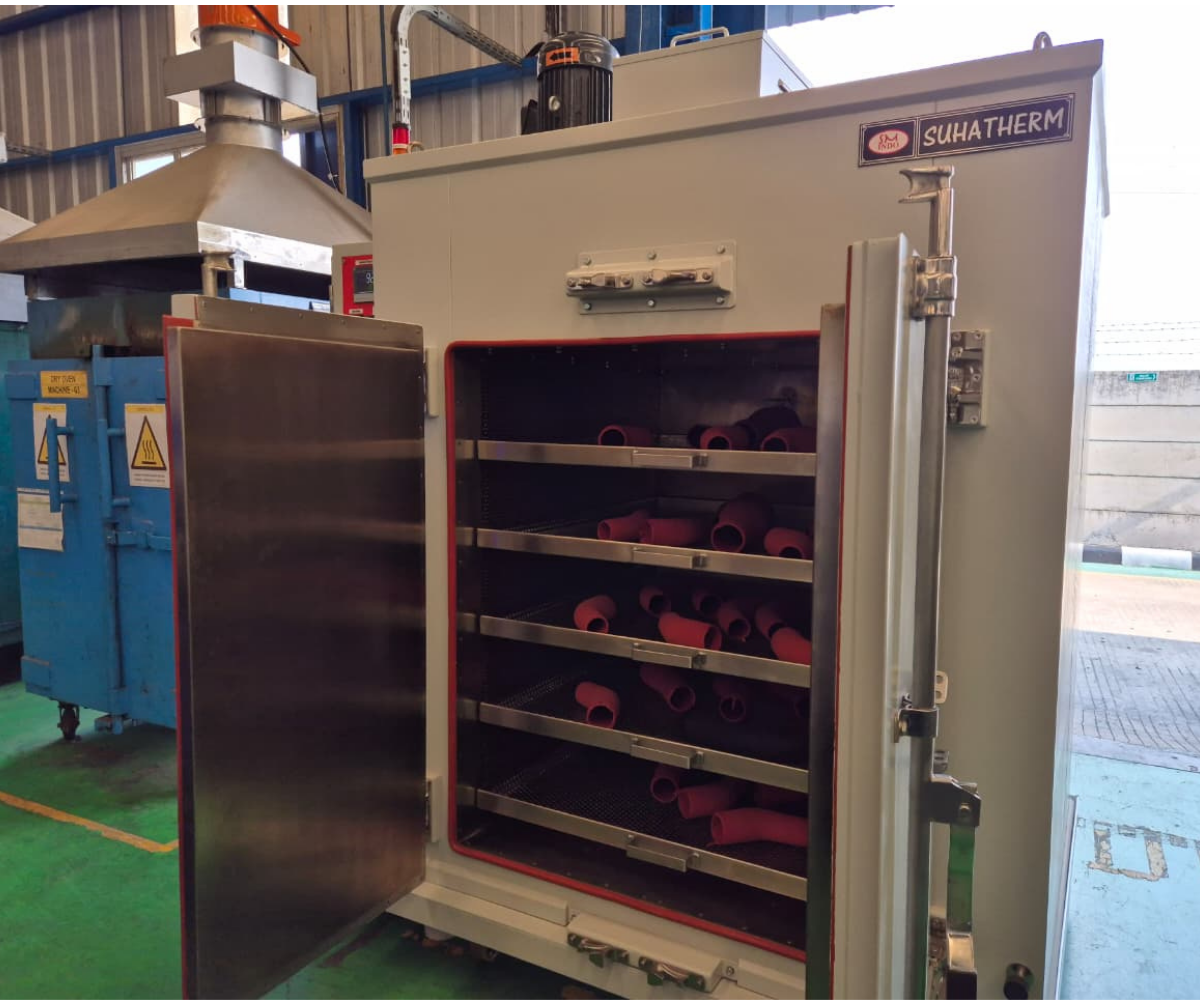
What is the Rubber Curing Process?
- Curing is the primary process where raw rubber is transformed into a usable material through chemical cross-linking after the moulding/extrusion process.
- Initial curing process may/may not involve heating rubber with sulfur (re: vulcanization) process, depending on rubber compound and customer requirements.
- Purpose:
- Improves elasticity and resilience.
- Provides mechanical strength.
- Makes rubber resistant to heat, wear, and deformation.
- Curing is essential in producing tires, seals, gaskets, and industrial components where durability is critical.
- Curing temperature may vary significantly by rubber type, but common examples include 140 – 170 degree Celcius (may vary according to customer process).
What is the Rubber Post-Curing Process?
- Post-curing is a secondary heating process applied after the initial curing or vulcanization process, at elevated temperatures.
- Rubber parts after curing are exposed to elevated temperatures (often 200–250?°C, may vary per product) for several hours.
- Purpose:
- Removes residual curing agents, volatiles, and odors. Rubber that has just been moulded/cured can have a very strong rubbery smell – which can be removed by post-curing.
- Enhances dimensional stability and mechanical properties, as rubber may develop residual stress during the moulding process.
- Ensure complete cross-linking, resulting in more stable and durable property.
- Post-curing is especially important for silicone rubber and fluoroelastomers, which are used in high-performance & clean applications such as automotive seals, medical devices, and semiconductor equipment.
Key Differences
|
Aspect
|
Curing Process
|
Post-Curing Process
|
|
Stage
|
Initial Process
|
Secondary Process after Curing
|
|
Temperature Range (May Vary According to Product Type)
|
140-200 (for vulcanization)
|
200-250 (extended heating process)
|
|
Purposes
|
Establish Cross-Link, Basic Strength
|
Remove Volatile Compounds, Enhance Final Properties
|
Why It Matters for Industry
For manufacturers in automotive, palm oil, and semiconductor sectors, understanding the difference between curing and post-curing is crucial.
- Automotive: Curing ensures strong and elastic seals, while post-curing enhances long-term stability under heat and oil exposure.
- Semiconductors & medical use: Post-curing ensures lower contamination & better stability.
Selecting the Right Rubber Curing & Post-Curing Oven
For manufacturers, choosing the appropriate oven for rubber curing and post-curing is essential to ensure a durable, reliable process and deliver products of consistently high quality.
Key Considerations When Choosing an Oven
- Temperature Range: Evaluate both the typical operating and maximum oven temperatures. These depend heavily on the specific rubber compound and the intended process requirements.
- Heating Power: Confirm that the oven has sufficient capacity to reach the target temperature within the defined cycle time.
- Temperature Uniformity: Ensure the oven provides excellent temperature distribution across the chamber. Refer to AMS2750 standards to avoid “temperature dead zones” that can compromise product consistency and quality.
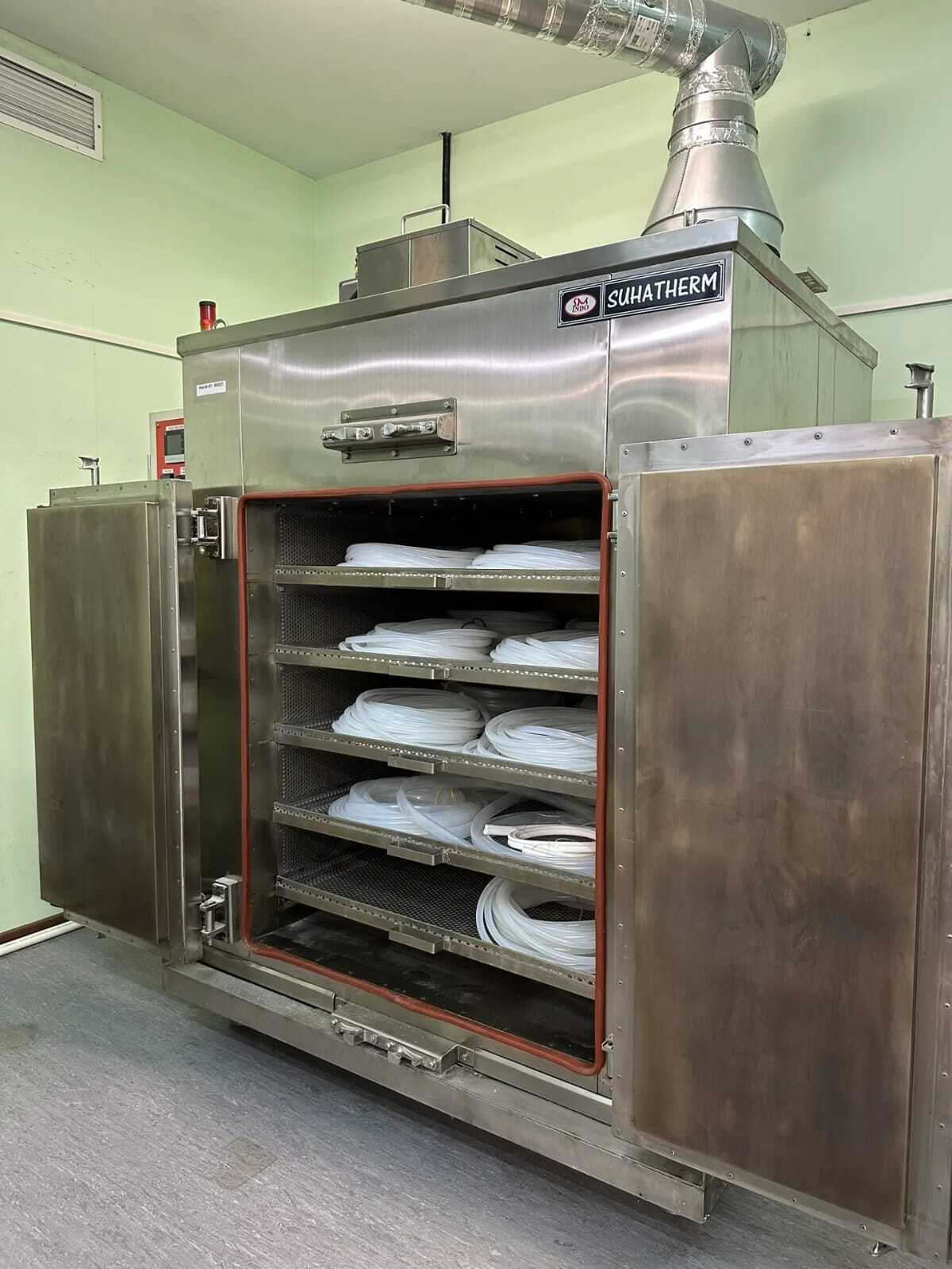
PT Suhatherm’s Post-Curing System
For post-curing applications, PT Suhatherm offers specialized rubber post-cure oven equipped with:
- Continuous filtered-air intake, enabled by detachable filter & dedicated air inhauster system maintaining a clean chamber environment throughout the process.
- Overpressure door (bomb-shell blasting wall) to automatically interlock heating power & circulation blower when overpressure happens, ensuring safety.
- These features is particularly critical for industries requiring contamination-free results, such as medical-grade silicone rubber manufacturing.
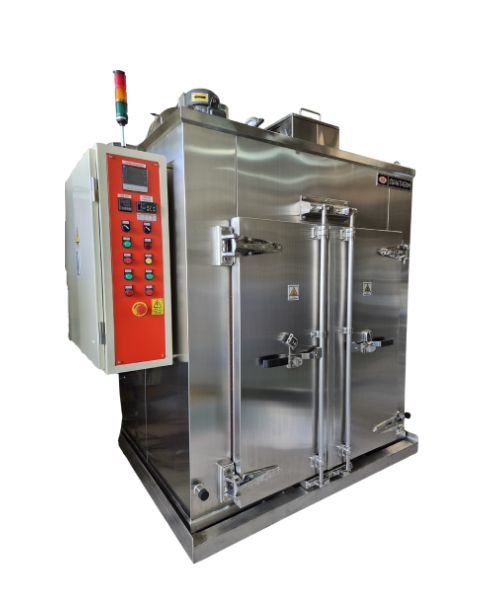
Shown above the Walk-in Post Curing Oven (WIPO) with Full Stainless Steel Construction Option
Conclusion
While curing and post-curing are often mentioned together, they are distinct processes with complementary roles. Curing provides the fundamental strength and elasticity of rubber, while post-curing refines and stabilizes those properties for demanding industrial environments.
At PT Suhatherm Manufacturing Indonesia, our industrial ovens are designed to support both curing and post-curing processes, ensuring clients achieve the highest performance standards.
Sources:
- Datta, R. N. Rubber Curing Systems. (Technical Monograph).
- Vryonis, et al. (2025). On the Post-Curing Thermal Treatment of Silicone Rubbers: A Study on Electrical Performance.
- McCarthy, et al. (1945). High-Temperature Oven Aging of Oil-Resisting Synthetic Rubber Compounds.